
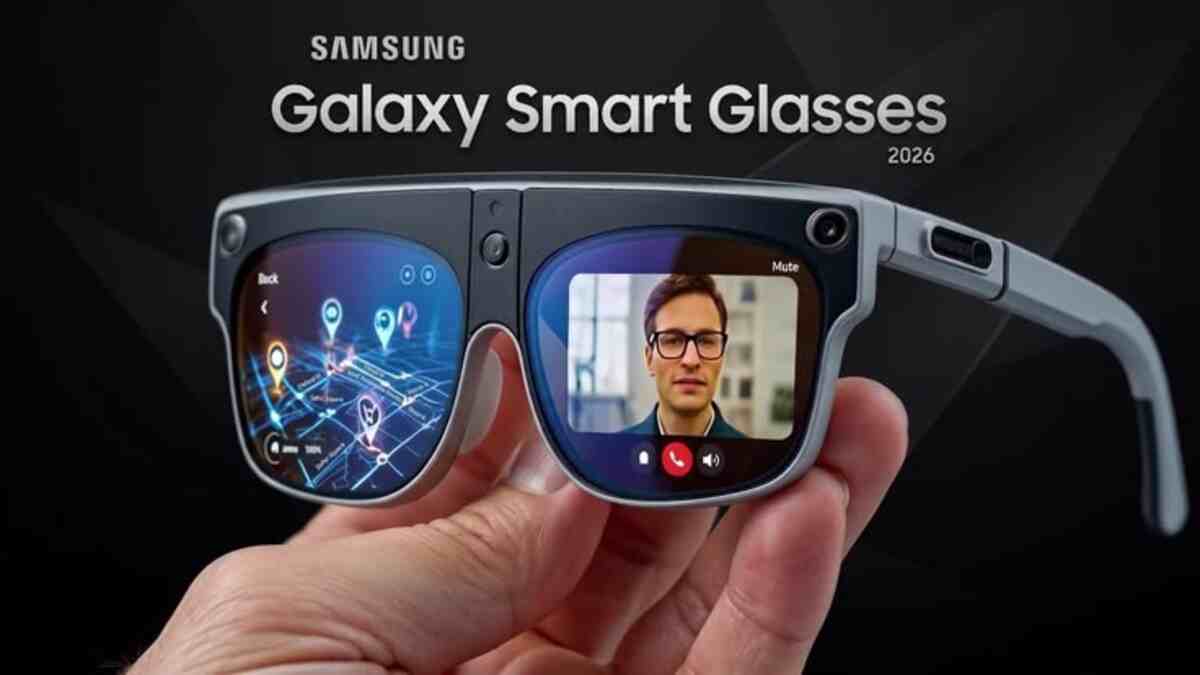

Samsung is preparing to enter the competitive smart glasses market with its highly anticipated Galaxy AI Smart Glasses, expected to launch in the second half of 2026. Recent reports suggest a possible July 2026 release window, aligning closely with the debut of the company’s next-generation Galaxy Z Fold 8 and Z Flip 8 foldable smartphones. This timing would allow Samsung to create a more cohesive AI-powered ecosystem across its flagship devices.
The upcoming Galaxy AI Smart Glasses mark Samsung’s first major foray into the smart eyewear category. According to details shared by Samsung executives, the device will feature a built-in camera positioned at eye level, enabling real-time visual context awareness. The glasses will connect directly to a user’s Galaxy smartphone, offloading heavy AI processing to the phone rather than relying on onboard hardware alone. This approach is designed to deliver seamless multimodal AI experiences that understand what the user is looking at and provide instant, relevant information.
Samsung is collaborating closely with Google on the project, integrating Gemini AI to power advanced capabilities such as real-time translation, voice recognition, contextual assistance, navigation support, and object identification. The glasses are expected to run on the Android XR platform, ensuring deep integration with the broader Galaxy ecosystem, including smartphones, watches, and earbuds. Users may receive notifications, control music playback, get directions, and enjoy hands-free AI assistance directly through the eyewear.
Industry insiders indicate Samsung is developing at least two variants. The initial model is likely to focus on AI functionality without a built-in display, prioritizing comfort, style, and everyday usability. A more advanced version with an in-lens augmented reality display is reportedly under development for a potential 2027 launch. The first-generation glasses are also expected to support both prescription and non-prescription lenses, making them more accessible to a wider audience.
Samsung has partnered with fashion eyewear brands such as Gentle Monster to ensure the Galaxy AI Smart Glasses combine cutting-edge technology with fashionable, lightweight designs suitable for daily wear. This aesthetic focus aims to position the product as a mainstream accessory rather than a bulky tech gadget, directly challenging popular offerings like the Ray-Ban Meta smart glasses.
The move into smart glasses reflects Samsung’s broader ambition to expand its AI footprint beyond smartphones and into wearable form factors. Executives have emphasized the importance of multimodal AI that processes audio, visual, and contextual data simultaneously to create more natural and immersive user experiences. By leveraging the processing power of Galaxy phones, the glasses can deliver sophisticated features while maintaining a sleek and comfortable form factor with efficient battery life.
Analysts view 2026 as a pivotal year for AI glasses, with multiple major players accelerating their efforts in the space. Samsung’s entry, backed by its vast ecosystem and strong partnership with Google, could significantly intensify competition and drive innovation in the wearable AI segment. The company has already hinted at “rich, immersive multimodal AI experiences” across different device categories, with smart glasses forming a key part of this vision.
As development progresses, expectations are high for Samsung to showcase more concrete details, including pricing and specific features, closer to the launch. The Galaxy AI Smart Glasses could become a compelling addition for users seeking discreet, always-available AI assistance without constantly checking their phones.
With the second half of 2026 approaching, anticipation continues to build around how Samsung will differentiate its offering in a market that is rapidly evolving. If successful, these glasses could play a major role in mainstreaming AI wearables and reshaping how people interact with technology in their daily lives.
The launch will be closely watched not just by consumers and tech enthusiasts, but also by competitors looking to benchmark their own next-generation smart eyewear products.
